


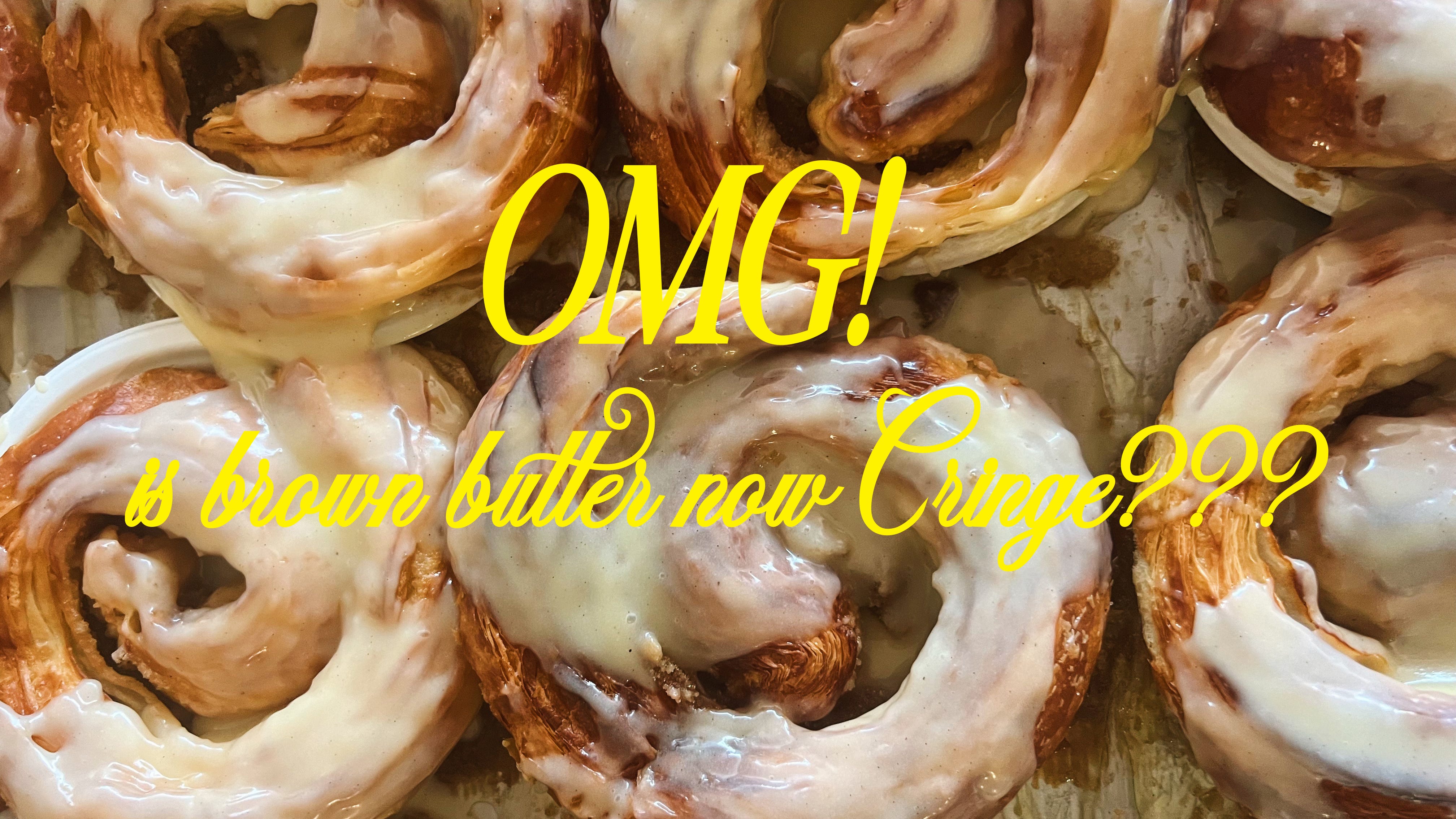
Seems like the internet is tired of brown butter now. I’ve seen a few posts lately from online pastry creators who are absolutely over the brown butter trend and have declared they’ll never put it in a cookie again. It had a good run. We browned it. We put it in cookies. We put it in cakes. We put it in buttercream, Rice Krispie treats, brownies, blondies, cinnamon rolls, and probably several things that absolutely did not need brown butter. So, of course, brown butter might have now become cringe. I understand the backlash. There is something irritating about watching an ingredient become so overly used and trendy that adding it to every recipe will make the recipe better. Brown butter chocolate chip cookies, brown butter cake, brown butter icing....WE GET IT. YOU BROWNED THE BUTTER. But as someone who is apparently making brown butter my entire personality over here, I have thoughts. Unfortunately, it’s still fucking delicious. And I refuse to pretend otherwise just because the internet used it to death.
Brown Butter Was Never a Trend
Before brown butter became something we slapped across the front of a cookie blog recipe, it was beurre noisette. Butter has been browned in French kitchens for forever because when you cook butter long enough for its milk solids to toast, something genuinely interesting happens. You are creating another flavor. The water cooks off and the milk solids begin to brown and the butter becomes something different. The flavor changes from creamy and buttery to nutty, toasted, caramel flavored, and also a bit savory. Brown butter didn’t become popular because somebody in marketing discovered the words brown butter. It became popular because it tastes really fucking good. And overuse doesn’t undo that.
Brown Butter and Beurre Noisette Are Basically the Same Thing
Beurre noisette literally translates to hazelnut butter, not because there are hazelnuts in it, but because of the hazelnut color and aroma the butter develops as the milk solids toast. Brown butter and beurre noisette are basically names for the same technique. When you are browning something, there isn’t one exact shade that magically makes it beurre noisette. When I make mine for baking, I like to take it to an amber golden brown. I want those milk solids properly toasted and nutty, with lots of flavor, but I stop before they cross into bitter or burnt territory.
There’s a progression:
Melted butter
Golden butter
Amber golden brown butter ——(This is where I live)
Deeply toasted brown butter
Burnt butter
And that last transition happens alarmingly fucking fast.
And For the Love of God, Keep the Brown Bits
Those little brown specks at the bottom of your pan? We are keeping them. It doesn’t mean we are doing it wrong. We are keeping that flavor in spades. When you brown butter, you’re cooking off much of the butter’s water while its milk proteins and sugars brown through the Maillard reaction. Those toasted milk solids create nutty, caramelized flavors that fundamentally change the butter. And those little brown bits are concentrated flavor bombs. If you wan to strain them go ahead. The scale of flavor is your choice. I usually keep them for all my brown butter baking.
King Arthur describes the relationship beautifully: the flavor of brown butter reflects the color of its milk solids. Lighter solids produce a milder flavor. Darker solids give you something richer and toastier. Take them all the way to black and you’ve gone too far.
Some pastry chefs strain the solids from their beurre noisette. That’s not wrong. There are applications where you might want the flavor without the sediment. King Arthur does both depending on what they’re making. But their brown butter chocolate chip cookie recipe specifically tells bakers to use the butter “bits and all.” They have also experimented with adding milk powder to create even more toasted milk solids and intensify that flavor. For my chocolate chip cookies? I’m using it. I’m scraping that pan clean. We paid for those brown bits, and I have a deep and unwavering love for a brown butter chocolate chip cookie over a regular one. Unless you’re Alison Roman’s chocolate chip shortbread cookie. Then apparently I have no principles and I’m an absolute traitor.
The Institute of Culinary Education takes a similarly sensible position when discussing browned butter in cookies: “It’s all a matter of taste.”
And I think that’s really the entire argument here. You can be tired of brown butter. You can prefer regular butter. You can absolutely think we’ve overused and abused it. That doesn’t mean brown butter suddenly stopped being delicious, or that everyone who continues to use it on the internet deserves to be mocked as an idiot who isn’t in the know.
Brown Butter Is Not Automatically Better Butter
Now I will join the brown butter haters for a minute. Not everything needs it. And you cannot necessarily take your favorite recipe, brown all the butter, substitute it gram for gram, and announce that you’ve improved it. Because you’ve changed more than the flavor. You’ve removed water. Butter contains an impactful amount of water and much of it evaporates during browning. At the bakery, using European butter, I generally expected to lose around 13 to 16 percent of the original weight during browning. This science does absolutely matter if you’re adapting an existing recipe rather than using one formulated specifically for brown butter. You need to think about that lost water and whether it needs to be replaced. So yes, there are badly conceived brown butter recipes. That’s not an indictment of brown butter. That’s an indictment of badly conceived recipes.
“Doesn’t the Butter Brown When You Bake the Cookie Anyway?”
I’ve heard this argument too. And no, baking a cookie darker and browning its butter beforehand are not interchangeable. Both involve browning reactions, but they’re happening to different components, under different conditions, at different points in the process. When you brown butter, you toast its milk solids before they ever enter the dough. When the cookie bakes, you’re creating another enormous collection of browned and roasted flavors throughout the cookie, particularly around its exterior. Think of them as layers of flavor.
Brown butter: nutty, toasted, caramel like depth.
A darker bake: roasted, caramelized, deeply baked cookie flavor.
One doesn’t cancel out the other. They can actually be fucking fantastic together. Of course there is a point of diminishing returns. Bake your cookie dark enough and those deeply roasted flavors may dominate the more delicate aromas of the brown butter. That’s not because the oven somehow reversed what you did to the butter. You just made a really dark cookie.
So, Does Every Cookie Need Brown Butter?
Obviously not. And this is where I think the whole argument gets unnecessarily silly. King Arthur actually tested chocolate chip cookies made with different fats. Their brown butter cookie won on flavor, while the regular butter cookie came out ahead when texture and appearance were considered together. Which is almost hilariously reasonable. Brown butter gives you something. Regular butter gives you something else. There is no universally superior chocolate chip cookie because we’re not all trying to make the same fucking cookie. Maybe you want a classic buttery flavor. Maybe you want something deeply toasted and nutty. Maybe you want a thick, soft cookie. Maybe you want thin crispy edges. Maybe you’re completely sick of brown butter. Fine.
There are approximately eight billion brown butter cookie recipes on the internet and another eight billion made with regular butter. Our recipe uses brown butter because that’s the cookie we prefer. More importantly, it’s the cookie our old customers want. That’s why we started this Substack in the first place. It’s for the people who tasted what we made, loved it enough to find us here, subscribe, and now get to make those same things at home whenever they want them.
I’m not taking the brown butter out of our cookie because the internet has decided it’s over brown butter. Make the cookie you like.
And we’ll continue to show you when brown butter really does make something better. Once you make our brown butter cream cheese frosting and slather it over a croissant cinnamon roll or a fluffy, moist sheet cake, you’ll understand exactly what brown butter can do and why we should never, ever stop using it.
The Part That Actually Bothers Me
I don’t care that maybe some people on the internet are tired of brown butter. Food trends become exhausting. We absolutely used the shit out of this one. What I don’t love is what tends to happen next. Something becomes wildly popular. Everyone uses it. Everyone posts about it. Everyone puts it on their menus. And then suddenly the pendulum swings and the thing we were all enthusiastically eating five minutes ago becomes embarrassing. Now it’s basic. Now it’s overdone. Now it’s cringe. But overused and bad aren’t the same thing.
And that seems to be where the actual divide is. Professional pastry is not rejecting beurre noisette. If anything, popular highly trained pastry chefs are finding increasingly technical ways to incorporate it. The fatigue is developing around brown butter as automatic sophistication, where browning the butter has become the culinary equivalent of adding “artisan” to a package.
Dominique Ansel recently went viral for a soft serve dipped in a shell made from actual butter. Literal butter dipped ice cream. And naturally, people in the comments immediately started suggesting a brown butter version. We’ve apparently reached the stage where the internet encounters literal butter dipped ice cream and says: “You know what this needs? Brown butter.” And, it still made British Baker’s 2026 trend report.
And lastly, what is cringe is if you were enthusiastically hopping on the brown butter bandwagon a few years ago, then turning around and making people feel cringe for still using it as an honest tool in their baking. Because we all know exactly how this ends.
Let’s not be mean girls about baking. Whether you’re a classically trained pastry chef or novice home baker, we’re all still learning every time we bake. Baking is supposed to be creative and fun, not another place to worry that someone more experienced has decided the thing you love making is now embarrassing. If brown butter makes your cookies taste better to you, use it. If you’re sick of it, don’t use it. Who are we to judge someone else’s JOY or where they are in their baking journey? It should be a big tent.
And please remember this, internet baking Karens: your favorite creator is not the be all end all of baking. Their opinion is an opinion, not a decree. We don’t need to grab the torches and pitchforks every time someone declares an ingredient cool, uncool, authentic, amateur, sophisticated, or cringe. So when you feel the need to “just let someone know” on their baking post, maybe don’t. Let people just bake and quietly scroll past. Let’s not bully brown butter into hiding for 2 decades until somebody’s kid finds beurre noisette in an old cookbook, puts it in a chocolate chip cookie and scans it into a futuristic hologram social media platform and announces they’ve discovered this old technique for their robots maids to now make for them.
And then we’ll all lose our goddamn minds over brown butter again.